



How to File a Claim After a Bus Accident in Georgia

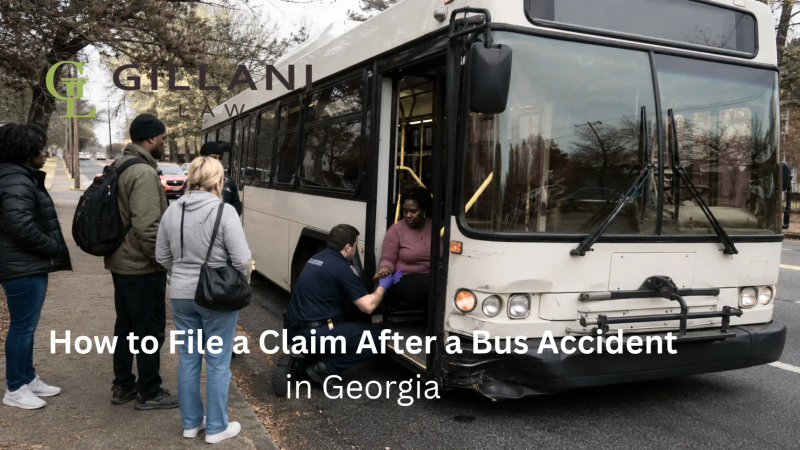
To claim after a bus accident in Georgia, you identify who was at fault, get medical treatment and document everything connected to the crash, then file within the deadline that applies to whoever caused it. Most people get that last part wrong. A claim against a private bus company generally gives you two years. A claim against MARTA, a school district, or another government entity can require notice in as little as six months, and missing that window can bar the claim before anyone even looks at your injury.
The reason this catches people off guard is simple. A regular car crash usually means one insurance company, one adjuster, one policy. Bus accidents rarely work that way. The bus driver might be an employee of a private company, a school district, or a public transit authority like MARTA. Each of those comes with its own rules, its own notice requirements, and in the case of government entities, a deadline measured in months instead of years. That's why the first real step in any bus accident claim isn't gathering evidence or calling an insurer, it's figuring out exactly who you're dealing with.
Who Is Liable in a Bus Accident?
Before you can file a bus accident claim, you need to know who caused it. That sounds obvious, but bus accidents involve more moving parts than a standard two-car collision, and the responsible party isn't always who you'd expect. Anyone injured in a bus accident, whether as a rider, a driver, or a pedestrian, starts in the same place: working out exactly who was at fault.


The bus driver is the first place most people look, and sometimes they're right. A bus driver who ran a red light, was distracted, or drove while fatigued has committed negligence, and that negligence is the foundation of your claim. But the driver is often just the visible end of a longer chain. Bus companies carry legal liability for how they train, schedule, and supervise their drivers. A company that pushes drivers past safe hours, skips maintenance, or ignores complaints about a specific route has exposure of its own, separate from whatever the driver did behind the wheel.
Then there's the vehicle itself. If a mechanical failure caused the crash, whoever was responsible for maintaining that bus, whether that's the transit authority, a charter company, or a third-party maintenance contractor, may share in the fault. Commercial and charter buses also fall under Federal Motor Carrier Safety Administration regulation, which sets maintenance, inspection, and driver qualification standards. A documented violation of those standards is often what turns a contested claim into a straightforward one, because a federal record is far harder for an insurer to argue around than your account of what happened.
School bus accidents add another layer. If a school bus was involved, you're usually dealing with a public school district, which brings government notice rules into play even though the injury feels no different from any other crash. A school bus crash rarely affects only the bus itself. Nationally, fatalities in school-transportation-related crashes fell 14 percent, from 128 in 2023 to 110 in 2024, and NHTSA data covering 2015 through 2024 shows most of those deaths were occupants of other vehicles, not children on the bus. That's why a claim after a school bus accident may belong to a driver, a pedestrian, or a parent, just as often as it belongs to a student.
None of this needs to be sorted out by you personally. But knowing that liability in a bus accident can span a driver, a company, a government entity, and a maintenance contractor all at once explains why these cases take longer to resolve than a typical fender bender, and why the party who looks obviously at fault isn't always the only one who should be named.
How Long Do You Have to File a Bus Accident Claim in Georgia?
If your bus accident involved a private bus, like a charter service or a tour operator, the standard Georgia personal injury statute of limitations applies, and it's more forgiving than what comes next if a government entity is involved instead.
Bus accidents involving a government entity are a different story entirely, and a lot of otherwise strong injury claims fall apart right here. If you were hurt on a MARTA bus, a city transit bus, or a public school bus, you're dealing with a government defendant, and Georgia requires a formal written notice, called an ante litem notice, before you can sue a government entity at all. It exists to give the government a chance to investigate your claim before a lawsuit is filed, and it applies whether you were a rider using public transportation for your daily commute or a driver hit by a bus on its route.
The exact window depends on which government entity is involved, and city or municipal transit claims like most MARTA cases fall under O.C.G.A. § 36-33-5, which sets that six-month deadline.
| Who caused the accident | Deadline | Governing statute | |
|---|---|---|---|
Private bus or charter company | 2 years to file suit | O.C.G.A. § 9-3-33 | |
City or municipal transit system (most MARTA claims) | 6 months to give written notice | O.C.G.A. § 36-33-5 | |
County | 12 months to give written notice | O.C.G.A. § 36-11-1 | |
State of Georgia or a state agency | 12 months to give written notice | O.C.G.A. § 50-21-26 |
A public bus doesn't automatically mean one uniform deadline applies. MARTA, a city transit system, a county-run service, a school district, and a state agency can fall under different statutes with different recipients, delivery requirements, and required content. Sending a notice to the wrong office, or leaving out a required detail, may not protect the claim even if it went out on time. In every case, the notice has to reach the correct office, state the right facts, and go out within the deadline, or the claim risks being barred regardless of how serious the injury was.
Georgia's comparative negligence rule matters here too. Under O.C.G.A. § 51-12-33, you can still recover compensation even if you were partly at fault for the accident, as long as you were less than fifty percent responsible. Your recovery gets reduced by your percentage of fault, but it isn't wiped out. In a multi-party bus accident, where a driver, a bus company, and a government entity might all share some responsibility, this rule is often what determines whether a claim is worth pursuing at all.
If you take one thing from this section, make it this: the moment you know a bus accident may involve a government entity, the six-month clock matters more than almost anything else in your case. Waiting to "see how you feel" before contacting a personal injury attorney is a luxury a government claim doesn't give you.
What Evidence Do You Need for a Bus Accident Claim?
Once liability is understood, the next job is proving it. Insurance companies and government risk offices don't take your word for what happened. They want documentation, and the strength of your evidence often decides how much your bus accident case is worth.

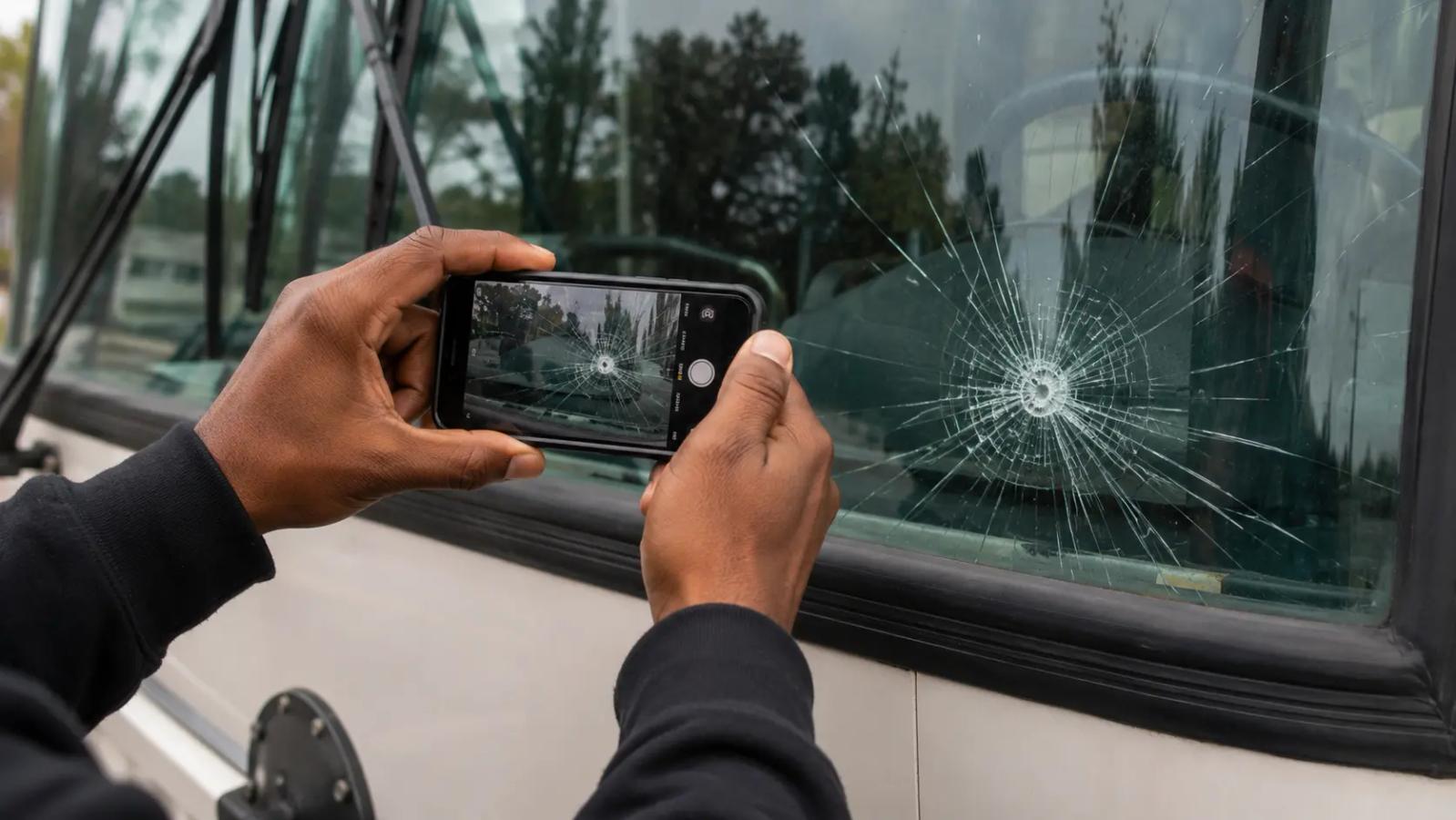
Medical attention comes first, and not just because it's good advice. Seeking medical attention immediately after the accident does two things at once: it starts your actual recovery, and it creates the first official record connecting your injuries to the crash. Injuries like whiplash, concussions, or soft tissue damage don't always show symptoms right away. A gap between the accident date and your first medical visit is exactly the kind of gap an insurance adjuster will use to argue your injuries came from something else.
From there, build out the file. A police report establishes an official account of the accident. Photographs of the scene, the bus, and any visible injuries create a visual record before anything gets cleaned up or repaired. Contact information for witnesses, including other passengers, matters more in bus accidents than in ordinary car crashes, because a bus full of people often means a bus full of people who saw exactly what happened.
Before you leave the scene, if you're able to, write down the bus company or transit authority, the bus number, the route, the stop location, the time, and the driver's name if it's available. This is the detail that actually lets an attorney trace the correct defendant, pull the driver's employment and training records, and check maintenance and inspection history before that evidence disappears into a transit authority's own internal file. Don't assume the bus operator's investigation will preserve everything your claim needs. It's built to protect their liability, not yours.
Keep every medical bill, every note from a doctor or physical therapy provider, and any documentation of missed income if the injury kept you out of work. Medical bills in particular carry weight with insurance adjusters, because they turn a subjective injury into a documented, dated financial loss. These aren't just paperwork. They're the numbers your personal injury attorney will use to support your claim when it's time to talk settlement.
What Compensation Can You Get After a Bus Accident?
Compensation in a bus accident case usually falls into a few clear categories, and understanding them shows why these claims are worth pursuing in full, even when today it's just a sore neck, and six months from now it's a stack of physical therapy bills you didn't see coming.
Medical expenses cover everything from the emergency room visit to ongoing therapy, and in cases involving permanent injury, future medical care as well. Lost wages account for income missed during recovery, and in more serious cases, reduced earning capacity going forward. Pain and suffering compensates for the physical and emotional toll of the injury itself, something that doesn't show up on a medical bill but is very real to anyone who's lived through it. In the most severe cases, where a bus accident results in a death, surviving family members may have grounds for a wrongful death claim, which follows its own separate legal process.
Property damage, if you were driving or riding in another vehicle that was hit by a bus, gets factored in as well. None of these categories are guaranteed. What you recover depends on the extent of your injuries, how clearly liability can be shown, and how well documented your losses are.
Why Do Insurance Companies Fight Bus Accident Claims?
Bus accidents tend to draw more resistance from insurers than a standard car accident case, and there's a reason for it. The dollar amounts involved are often larger, because buses carry more passengers and cause more severe injuries when something goes wrong. That means insurance companies, and government risk management offices, come in prepared to minimize what they pay rather than settle quickly.
That resistance often shows up as delay. When a driver, a bus company, and a government entity might all share fault, each insurer or risk office can point to the others rather than commit to a number, and the case can stall while that plays out. A personal injury lawyer changes that dynamic, not because the law requires one, but because an attorney experienced in bus accident claims can preserve evidence before a transit authority's own investigation wraps up, push each responsible party to commit instead of waiting out the others, and value a claim that involves multiple defendants instead of one straightforward at-fault driver.
Gillani Law has recovered $2.3 million in recent case results for Georgia injury victims, including six-figure settlements built on exactly this kind of multi-party evidence work. Past results don't guarantee any particular outcome, and every case turns on its own facts, but they show what's possible when a claim is built correctly from the start instead of handed to an insurer to define on its own terms.
Talk to a Bus Accident Lawyer in Georgia
If you've read this far, you already suspect your bus accident case is more complicated than it first looked. That instinct is usually right. Bus accident claims go wrong in Georgia more often than most personal injury cases, and it's almost always because someone waited too long to find out which rules applied to their specific crash.
Sabrina Gillani and the team at Gillani Law handle bus accident claims across Georgia, including cases involving MARTA, school districts, and private bus companies. Find out who's liable, what deadline applies to your case, and what your claim could be worth, so you're making decisions with real information instead of guessing while the clock runs down. A free consultation costs nothing, and there's no fee unless we win your case. Past results do not guarantee similar outcomes, and every case is evaluated on its own facts.
Frequently Asked Questions
Whichever question brought you here, the same rule applies: the sooner Sabrina Gillani and the Gillani Law team review your case, the more of your deadline you have left to work with. Call and find out where you actually stand.